Online Magazine
Recent Posts
- Safeguard your Cellphone Photos
- Black & White to Color – Instantly
- Wearing Many Hats
- Video Roundup
- Rescuing Your Blurry Pictures
- Showing Their Age
- What is Your Angle?
- Panorama Photos
- Humorous Photos
- Close Ups
- Fisheye Pictures
- Photo Antiquities
- Printing Big
- Appreciating Scale
- Celebrity Sightings
Tags
More Places to Go
- Free "How-To" Books “How To” books for popular cameras 0
- Vist Us on Facebook keep in touch with us on Facebook 2
Archives
- July 2023 (1)
- March 2023 (2)
- February 2023 (1)
- December 2022 (1)
- October 2022 (1)
- September 2022 (8)
- August 2022 (9)
- July 2022 (1)
- June 2022 (1)
- June 2021 (1)
- May 2021 (1)
- March 2021 (5)
- February 2021 (4)
- January 2021 (2)
- April 2019 (1)
- March 2019 (1)
- February 2019 (1)
- October 2018 (2)
- April 2018 (1)
- March 2018 (4)
- February 2018 (1)
- November 2017 (1)
- August 2017 (1)
- June 2017 (1)
- April 2017 (1)
- March 2017 (5)
- February 2017 (2)
- January 2017 (1)
- October 2016 (1)
- September 2016 (1)
- August 2016 (1)
- July 2016 (1)
- May 2016 (1)
- April 2016 (1)
- March 2016 (2)
- February 2016 (1)
- January 2016 (2)
- December 2015 (1)
- November 2015 (1)
- October 2015 (3)
- April 2015 (1)
- March 2015 (5)
- February 2015 (1)
- January 2015 (4)
- December 2014 (2)
- November 2014 (5)
- October 2014 (2)
- September 2014 (1)
- August 2014 (2)
- July 2014 (1)
- May 2014 (1)
- April 2014 (5)
- March 2014 (5)
- December 2013 (2)
- November 2013 (18)
- October 2013 (1)
- September 2013 (1)
- August 2013 (1)
- July 2013 (1)
- June 2013 (3)
- May 2013 (1)
- April 2013 (2)
- March 2013 (1)
- February 2013 (1)
- January 2013 (1)
- December 2012 (1)
- November 2012 (2)
- October 2012 (2)
- September 2012 (5)
- August 2012 (2)
- July 2012 (1)
- June 2012 (1)
- May 2012 (1)
- April 2012 (4)
- March 2012 (1)
- February 2012 (1)
- January 2012 (3)
- December 2011 (1)
- November 2011 (3)
- October 2011 (1)
- September 2011 (2)
- August 2011 (2)
- June 2011 (3)
- May 2011 (4)
- April 2011 (8)
- March 2011 (8)
- February 2011 (10)
- January 2011 (6)
- December 2010 (11)
- November 2010 (14)
- October 2010 (6)
- September 2010 (12)
- August 2010 (2)
- July 2010 (4)
- June 2010 (3)
- May 2010 (1)
- April 2010 (1)
- March 2010 (2)
- February 2010 (1)
- January 2010 (1)
- December 2009 (1)
- November 2009 (2)
- October 2009 (2)
- September 2009 (1)
- August 2009 (3)
- July 2009 (2)
- June 2009 (1)
- May 2009 (2)
- April 2009 (1)
- March 2009 (2)
- February 2009 (1)
- January 2009 (3)
Experiencing the Environment
03rd September 2012
and keeping the environment “a thing of importance”
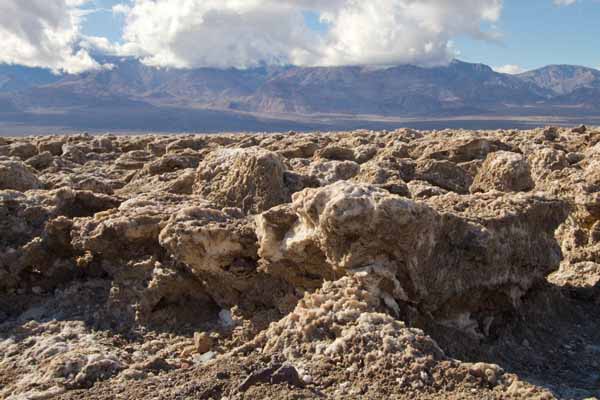
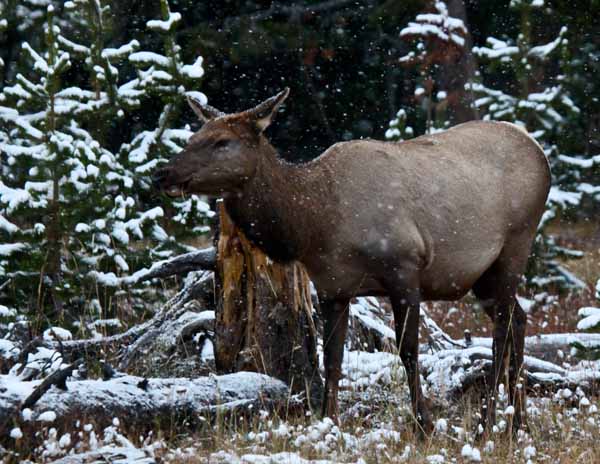
Our family has been enjoying the outdoors for many years. Some of our adult children were mere babies when we trekked long distance to experience and camp in far away places like Mono Lake, Yellowstone and Acadia. We were attracted by tight knit forests, tumbling waterfalls, golden meadows, majestic mountains, winding hiking trails, abundant wildlife, trickling streams and shimmering nighttime skies.
The love of nature has been in my blood from childhood. At the University of Michigan I studied natural resource economics. The year was 1970 and the call for ecology had gone out with the first Earth Day and notable proponents such as author Rachel Carson, politician Senator Gaylord Nelson, futurist Buckminster Fuller, economist E.F. Schumacher. With my studies, I was counting on a future career that would revolve around conservation and ecology. But as often happens, this career plan didn’t come to pass. Nonetheless, I’ve been trying to keep nature and the environment close to my heart all the years since.
Wouldn’t you guess that photography has been one of my hobbies also since childhood? So it’s only natural that I would arm myself with a camera as our family traveled far and wide. And while family snapshots comprise an important part of my picture taking activities, the other part are the photos that I take to record the many amazing places that we visit.
These are all “peopleless” photographs. They’re meant to illustrate the beauty, scale, magnificence and sometimes fragility of some of our nation’s most iconic vistas and scenery.
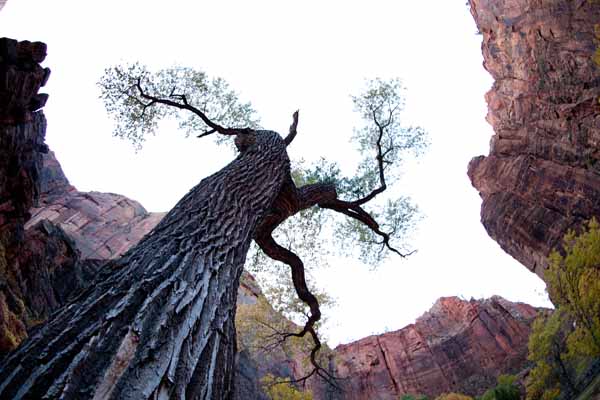
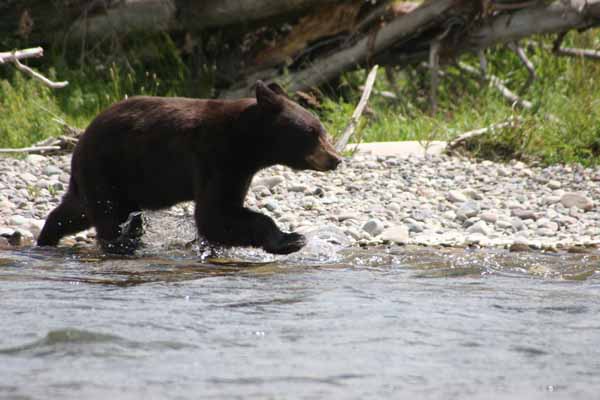
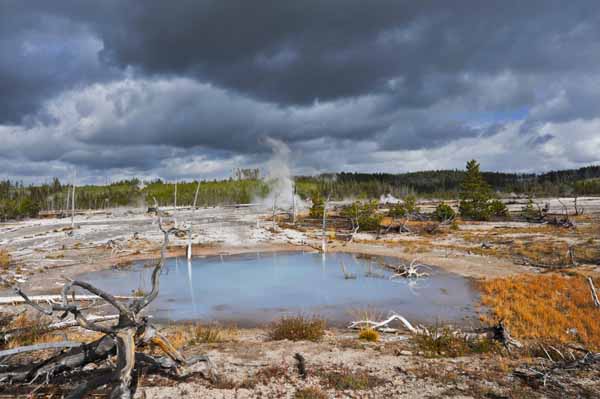
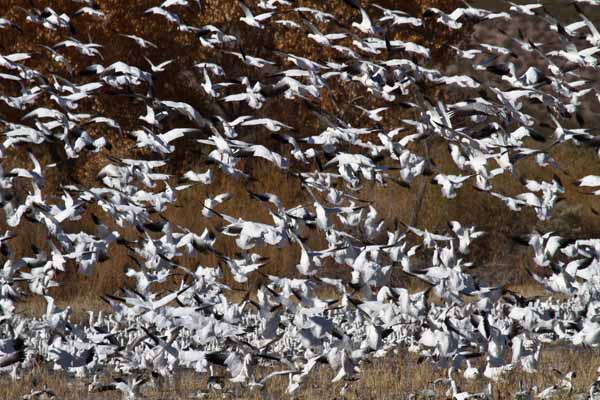
Here are some of those picturesque places that we’ve experienced in our travels.
 |
 |
 |
 |
 |
 |
 |
 |
 |
 |
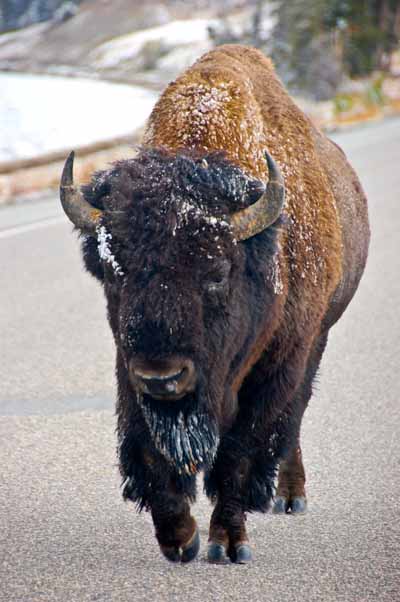 Lake, Yellowstone NP |
 Upper Yellowstone Falls, Yellowstone NP |
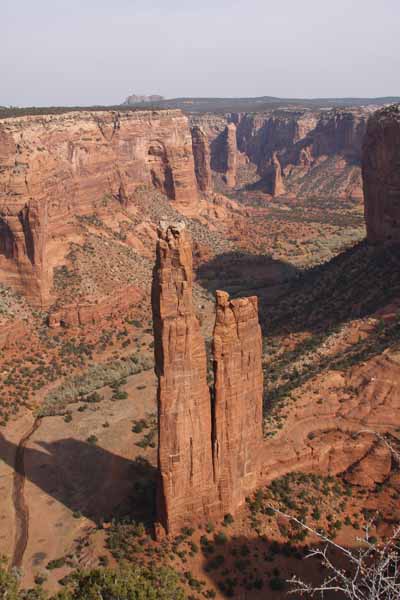 Spider Rocks, Canyon de Chelly NM |
 |
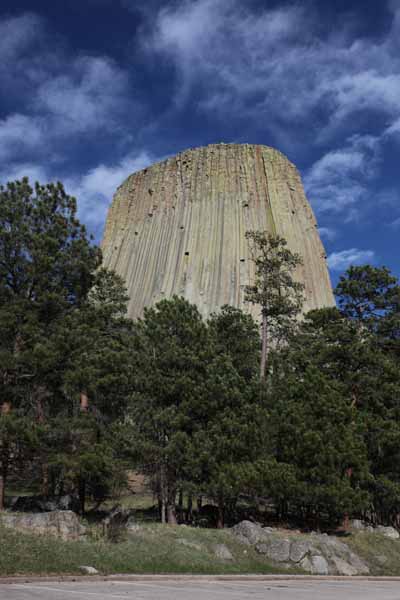 |
As I view this photo, I can feel the mist rising from the roaring waterfall. When I look at that photo, I find myself breathing in the scent of an immense douglas fir forest. In a third photo, my eyes are following the billowing clouds passing over a craggy, red rock canyon. And that photo has me marveling at the way the bright, fall colors accent the distant snow-covered peaks. Yes, all of these photos serve to remind me how wondrous our environment really is.
But I haven’t completed documenting my encounters with the outdoors just yet. And so I’m determined to continue experiencing the environment in person. I somehow prefer the phrase “experiencing the environment” rather than “capturing the environment” even though I may be recording the scene with a camera.
Whether it’s a national, state, county or city park or any other natural setting, I will treat the environment with respect.
I remain committed to practicing “leave no trace photography” – disturb neither our environment nor our wildlife.
Written by Arnie Lee
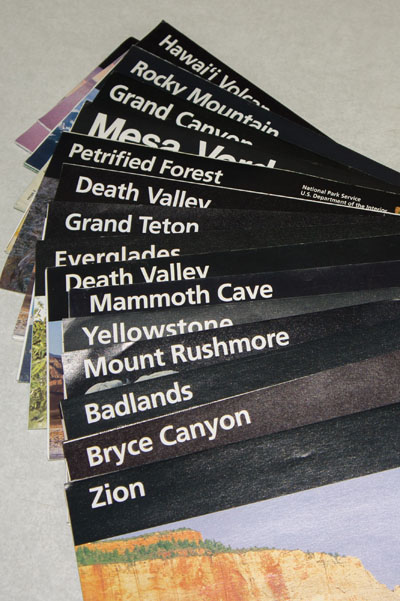
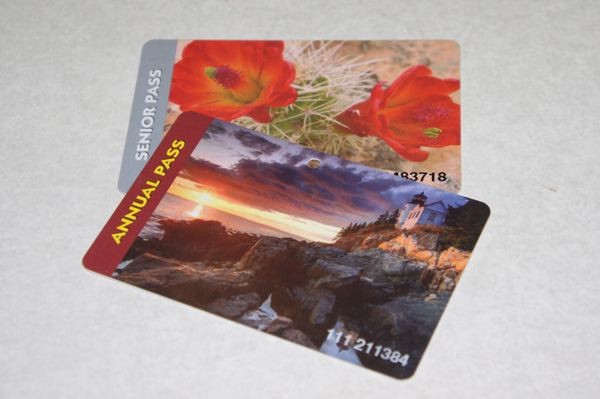
Our National ParksAs you can see from the photos above, I’m a avid user of our National Park System. It’s extensive, consisting of almost 400 parks, monuments, landmarks, recreation areas, shorelines, trails, historic sites and wildlife refuges and encompassing some 85 million acres. Each year 275 million of us outdoor lovers visit these places. Entrance fees vary by unit, but an $80 annual pass is a bargain if you plan to visit several parks. Senior citizens 62 years and older can purchase a lifetime pass for only $10. Find our more about our National Parks here. |
|
 |
 |
Sometimes luck trumps skill
04th March 2011
Shooting Birds
Certainly one of the reasons that I enjoy the profession so much is that there are so many types of photography to choose from: architectural, wedding, journalism, nature, portrait, fine art, and the list goes on.
And like many other photographers, I often jump from one type of photography to another when the job calls for it or when I feel the need to “escape” to a totally different subject.
Each type of photography utilizes different skills.
For example, portrait photography is most successful when the subject can comfortably relate to the photographer who then combines creative posing and technical lighting to record a likeness of that subject.
A food photographer may use many tricks to enhance the appearance of a gourmet dish – with sprays, glue or gels, perhaps. These are skills that make the food look good; you probably wouldn’t want to eat the food after the photo session.
Having participated in many of the types of photography over the past 40+ years, I have learned that some types of photography require a higher level of skill than others.
From my experience, “photography degree of difficulty” varies from snapshots and event photography at the low end to wedding photography at the high end. And somewhere near the high end is wildlife photography. For the last few years, I’ve spent a lot of time trying to improve my wildlife skill level.
| Birds are among the most nervous types of animals to photograph. Approach a bird perched on a branch and he’ll quickly fly away.
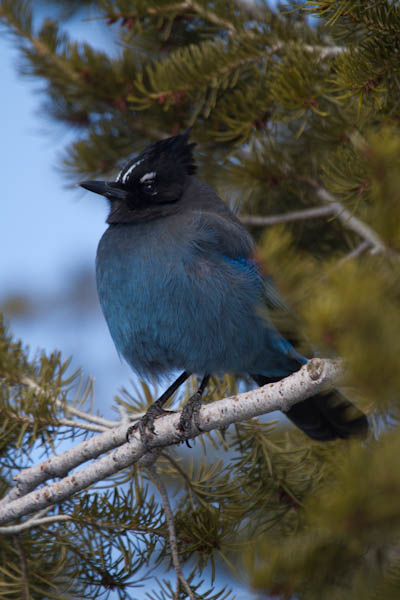
Consequently, most of my photos of birds are from quite a distance using a long telephoto lens. On my last outing, I snapped several bird photos which drew complimentary comments from several viewers. While I’d like to think that the photos were the result of my great skills as a nature photographer, in this case it’s not true. Last week, I was doing a little winter hiking in Bryce Canyon NP and stumbled upon this colorful Stellar’s jay. This photo was taken with long telephoto lens from about 50 feet away. I hesitated to approach the jay any closer for fear that he’d take off. |
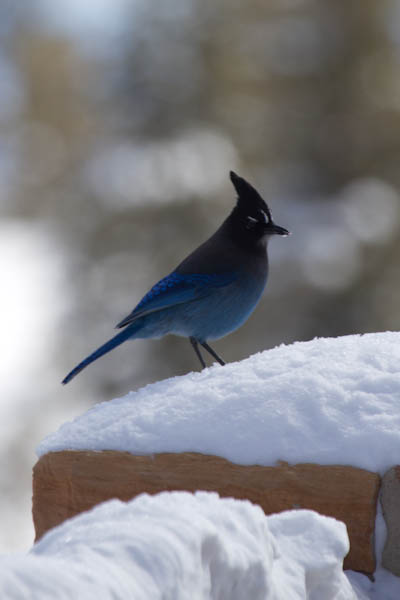 |
| Surprisingly, the jay flew closer to me. In fact, he ended up landing on a tree branch that was only 20 feet from where I was standing.
I can only surmise that in the cold wintery weather he was acting differently than he would if I encountered him in warmer weather. My telephoto lens has two settings: one to accommodate close focusing (2 meters) and one for more distant focusing (8 meters). So as not to disturb the bird, I very slowly changed the lens setting for close focusing and snapped. Bingo. Here’s the closeup that I ended up with of the Stellar’s jay. I can definitely say that this photo was more a matter of luck than skill. Anyway, for me this photograph is a definite keeper. |
 |
| As a counterpoint, here’s a less lucky encounter that I had about an hour before.
As I was hiking along the hard packed, snow covered trail that descended into one of the canyons, I heard a screech overhead. I gazed upwards and saw a large, majestic set of wings in the sky. I hurriedly changed lenses to my long telephoto and looked up again. But during the minute that I spent changing lenses, the predator had climbed higher and farther away. |
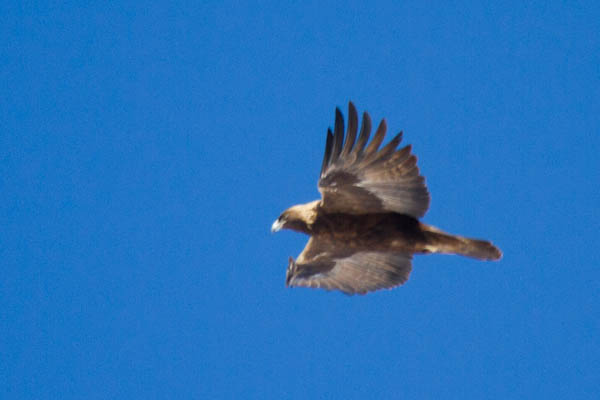 |
I quickly snapped a half dozen photos before the eagle was out of range. Unfortunately, I wasn’t as lucky here. The photo is blurred owing to the distance and my rushed attempt.
So this time out, luck played a role in my capturing the Stellar’s jay. But I wasn’t as lucky with the golden eagle.
Still, I know that unless I’m out there hiking the trails and observing my surroundings that luck won’t have a chance to take hold. Each time I’m out enjoying nature I’m hoping that for that lucky catch.
Take enough photos and luck will come your way too. It’s a promise.
Written by Arnie Lee
Traveling Light
05th February 2011
A Vote for the Backpack Camera Case
Here in Michigan, it’s been bitterly cold with plenty of snow. A blizzard earlier this week closed virtually all of the schools and municipal services and curtailed most of the business at retail stores as well. So it shouldn’t be surprising that I’m looking forward to a few days away from the blustery northern winter to shoot birds in the warmth and sun of the Everglades.
Since most of my expeditions last only four or five days at a time, when flying I travel light. By carefully selecting the appropriate equipment for a given assignment, it all fits snugly into my backpack camera case. This along with my trusty rollerboard suitcase means that I rarely have to check my luggage for an airline flight, saving me the trouble of waiting at the baggage claim.
To photograph the birds, I decided on the Canon 7D. Its excellent autofocus system works well with the long 100-400 telephoto. While it doesn’t have the resolution of the 5D MkII, it’s smaller and lighter and also accepts the 10-22mm lens, one of my favorites. I’ll bring along the 2X TeleExtender in case I need the extra reach.
For a second camera, I’m taking the new Sony Alpha 55. I’ve already put it through six weeks of testing and will use this assignment to complete my review of a very innovative camera. I’m also toting the waterproof Olympus 6020. It may come in handy in Florida’s watery environment.
 this is the equipment that I selected for shooting birds in the Everglades |
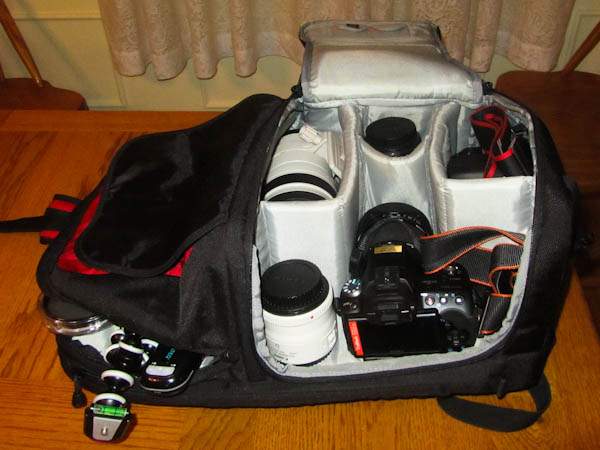 all of the equipment fits neatly into the large, padded compartment including the notebook computer |
Here’s the list of equipment that fits inside:
- Lowepro Fastpack camera backpack
- Canon 7D camera
- Canon 100-400mm lens
- Canon 2X TeleExtender
- Canon 10-22mm lens
- Sony Alpha 55 camera
- Sony 18-250mm lens
- Olympus 6020 waterproof camera
- Canon SX210 camera
- GisTEQ GPS
- GorillaPod
- notebook computer
- several battery chargers
When fully loaded, this backpack weighs about 40 pounds. It’s heavy but this backpack has wide, padded straps that cushion the weight. The upper compartment has room for a few magazines, an iPad and a some snacks – especially important on a long flight. Conveniently, the backpack fits beneath the passenger seat so that I can get to any of its contents without having to reach into the aircraft’s overhead compartment.
When I arrive at the hotel, I’ll remove the notebook computer and other non-photographic items. The backpack will then serve as a field camera case. I can comfortably take photos while wearing the backpack. If I swing one of the straps off of my arm, I can access the zippered compartment e.g. to get another lens.
I’ve been using the Lowepro for more than two years. This represents more than 100,000 miles of air travel and at no time has any of my equipment been damaged. The ballistic nylon outer surface looks almost new. I’ve also owned the Kata and Tamrac backpacks, but the Lowepro has held up the best.
I have another day of rest before I fly out of this Arctic look-alike. I hope there are some birds left in Florida for me to shoot.
Written by Arnie Lee
« Older Posts — Newer Posts »